Drew Vogel · 4 November 2026
European Healthcare Educators Experiment with Scrum-Based Simulations to Address Team Coordination Challenges in Medical Training Programs
Medical training programs throughout Europe continue to confront persistent issues with team coordination during high-pressure clinical scenarios, and educators have begun integrating Scrum frameworks into simulation-based exercises to tackle those gaps directly. Data from multiple institutions shows that traditional hierarchical training methods often leave gaps in real-time collaboration, prompting a shift toward iterative planning cycles borrowed from software development practices.
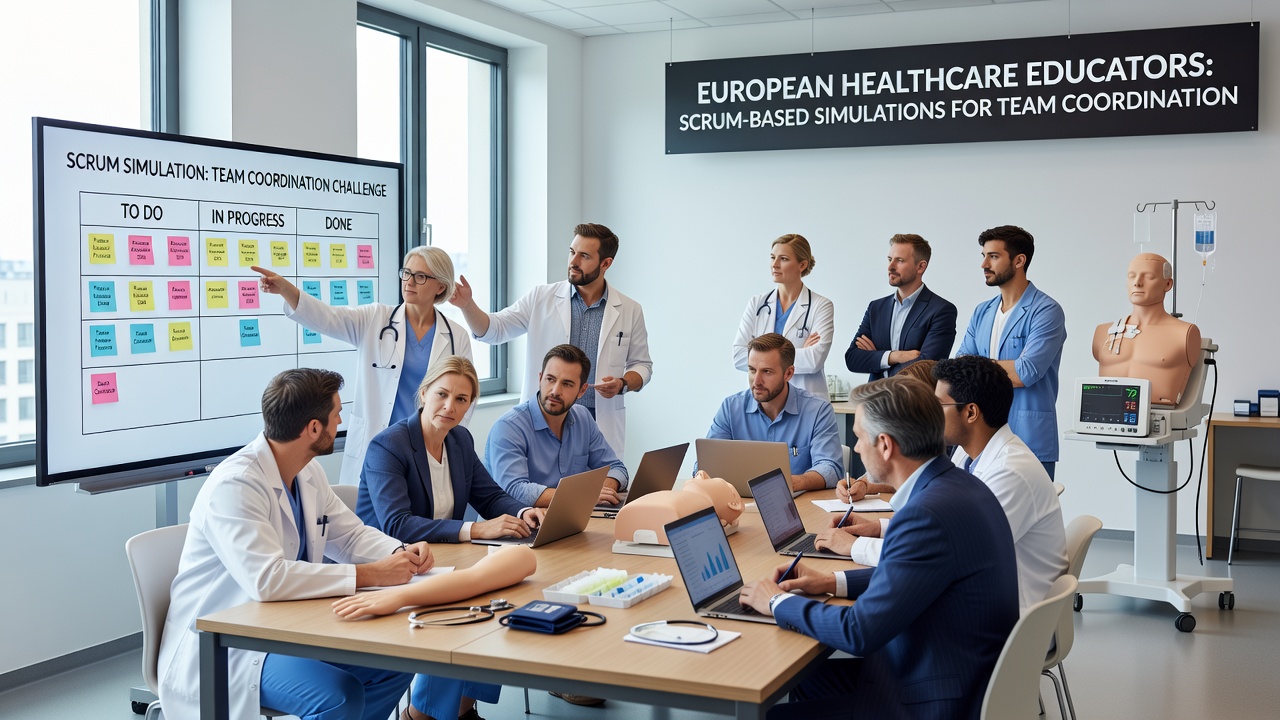
Scrum elements such as daily stand-ups, sprint reviews, and role rotations now appear in emergency response drills at universities in Germany, the Netherlands, and Sweden. Trainees assume positions including product owner for case prioritization and scrum master for facilitation, while completing short cycles that mirror actual shift handovers. Research indicates these adaptations help surface communication breakdowns before they reach live patient environments.
Adapting Agile Practices to Clinical Contexts
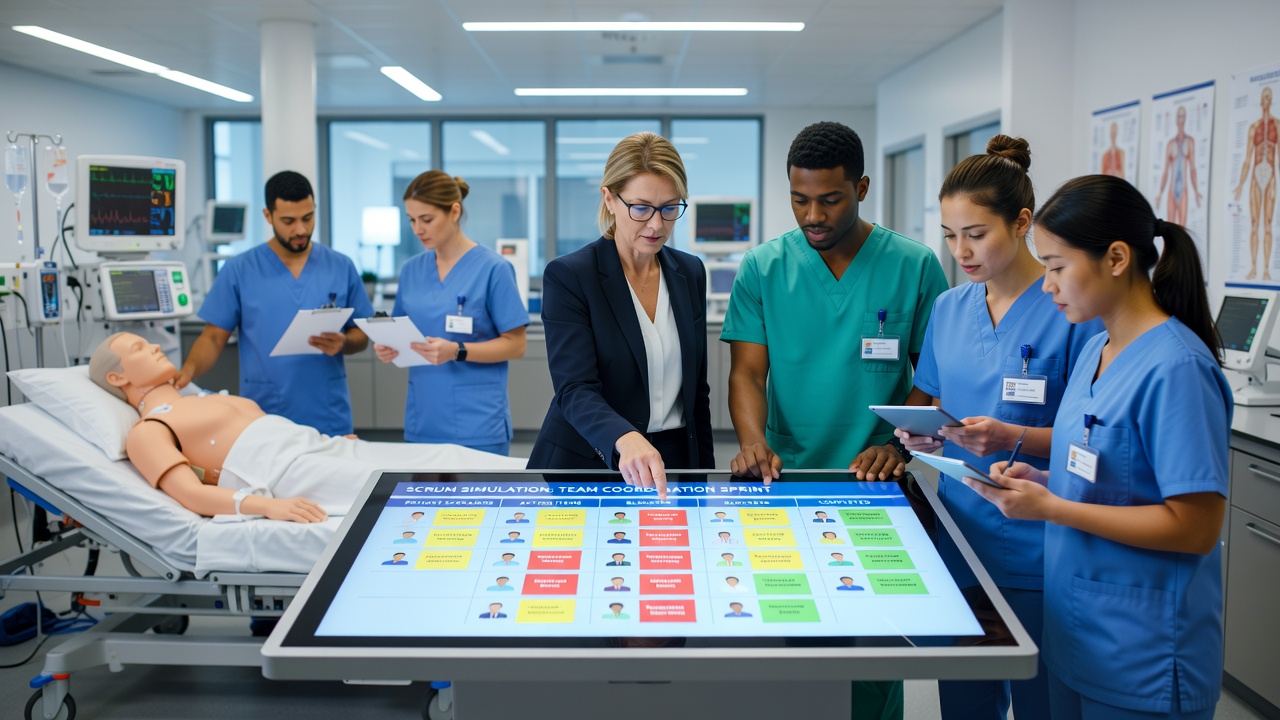
Educators map Scrum artifacts onto medical workflows by treating patient care pathways as product backlogs, with each simulation sprint lasting 15 to 30 minutes. Participants log impediments on physical boards during debriefs, and velocity metrics track how quickly teams complete standardized procedures such as trauma assessments. Studies conducted across six European medical schools reveal measurable reductions in coordination errors after four consecutive simulation rounds.
One program at a Dutch university hospital incorporated cross-functional teams that blend nursing students, medical residents, and pharmacy trainees, requiring them to negotiate task assignments in real time. Figures from the 2025 academic year demonstrate that groups using these methods completed joint protocols 22 percent faster than control cohorts relying on conventional lecture formats.
Regional Pilots and November 2026 Milestones
Programs in Poland and Finland have extended Scrum simulations into interprofessional modules that address chronic care transitions, incorporating stakeholder feedback loops with simulated family members and primary physicians. Observers note that these exercises highlight bottlenecks in information transfer that standard OSCE assessments often overlook. A pan-European consortium plans to release comparative outcome data during a November 2026 summit hosted in Brussels, where preliminary results from 14 participating sites will be presented.
Funding from national health ministries has supported equipment upgrades that allow real-time digital tracking of team interactions, and several sites now integrate wearable sensors to quantify verbal exchanges and physical positioning. According to reports compiled by the European Commission Directorate-General for Health and Food Safety, such instrumentation provides granular datasets that training coordinators use to refine subsequent sprints.
Evidence from Multi-Site Evaluations
Evaluations at institutions in Spain and Ireland compare Scrum-enhanced simulations against traditional team-based learning approaches, with outcome measures focused on error rates during cardiac arrest protocols and surgical instrument handoffs. The data shows consistent improvements in role clarity scores and a decline in duplicated tasks across iterations. Researchers at one Madrid-based center documented a 31 percent drop in missed handoff items after implementing two-week sprint cycles that included structured retrospectives.
Academic partners from the University of Toronto have contributed comparative frameworks, though the primary data collection remains centered in EU member states. Industry organizations such as the Association for Medical Education in Europe have begun cataloging these simulation variants in open-access repositories to facilitate wider adoption.
Scaling Considerations Across Borders
Cross-border collaborations require adjustments for varying regulatory environments, yet the core Scrum ceremonies translate readily once language and documentation standards are aligned. A joint initiative between Belgian and Austrian faculties has produced shared backlog templates that accommodate both local terminology and EU-wide competency frameworks. Those involved report that the modular nature of sprints simplifies integration with existing accreditation requirements.
Training centers continue to collect longitudinal data on graduate performance in residency placements, and early indicators suggest sustained gains in collaborative behaviors persist beyond the simulation laboratory. November 2026 will mark the first large-scale release of these follow-up metrics, offering clearer visibility into long-term transfer effects.
Conclusion
European medical educators have established multiple proof-of-concept sites that demonstrate how Scrum-based simulations can target specific coordination deficits in healthcare training. The approach relies on iterative feedback and defined roles to replicate the pace of clinical work, with accumulating datasets supporting further refinement ahead of the scheduled November 2026 reporting cycle. Continued monitoring across diverse national contexts will determine how widely these methods integrate into standard curricula.